
IIT Bhubaneswar researchers have developed 'ArsenSafe', a portable, low-cost device for rapid, on-site detection of arsenic in drinking water. This innovation aims to address the critical public health challenge of arsenic contamination in groundwater, offering a solution that doesn't require laboratory infrastructure.

The organisation further clarified that it will be represented by Ankur Vora, President of Africa and India Offices, who 'will speak later today at the Summit'.

Meta's new Muse Image AI generator, which can create AI images from public Instagram accounts without explicit consent, has sparked significant privacy concerns and criticism over its 'opt-in-by-default' approach, raising fears of deepfakes and online impersonation.

The start of the West Asia conflict has led to a sharp increase in crude-linked raw material prices, pushing up the price of helmets across the country.

FIFA President Gianni Infantino has acknowledged the possibility of expanding the World Cup to 64 teams, a move that could significantly alter the sport's economics and logistics, despite opposition from major confederations like UEFA and AFC.

If we really want to curb the further depreciation of the rupee and make the rupee appreciate, we want to come out of the mindset that the exchange rate is merely a number, bring policy corrections to help reduce the outflow of foreign exchange by imposing suitable tariffs to discourage imports and bring self reliance, discipline FPIs, and correcting rules governing royalty outflows, suggests Dr Ashwani Mahajan, National Co-Convenor, Swadeshi Jagaran Manch.

Gwadar is viewed as a critical pearl in China's maritime strategy as it would give a permanent logistical footprint near an important choke point - the Strait of Hormuz and the oil rich Persian Gulf, explains Commodore Venugopal Menon (retd).

The Indian Institute of Technology Roorkee has signed two technology transfer agreements with Cathion Energy Private Limited for the commercialisation of advanced lithium-ion battery electrode technologies.

A top executive of Sigachi Industries has been arrested in connection with the explosion at its pharma plant in Telangana in June, which resulted in 54 deaths.

Analysts predict that developments in West Asia, their impact on crude oil prices, and the trading activity of foreign institutional investors (FIIs) will be crucial factors influencing the Indian stock market this week.

Investors and startup executives are calling for extending the period for an entity to be recognised as a startup from 10 to 15 years for deep-tech companies.

Streaming has globalised the entertainment industry, enabling artists like Diljit Dosanjh and Arijit Singh to reach diverse international audiences.

'You have seen the retrenchments by big corporates in the IT industry because they are not getting enough offers.' 'MSMEs in the manufacturing sector are really struggling. They do not know what to do. They are not able to predict what will happen tomorrow.'
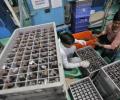
Escalating geopolitical tensions in West Asia are beginning to disrupt India's automotive supply chain, leading to rising commodity prices, logistics bottlenecks, material shortages, and pressure on consumer demand, with two-wheeler makers already raising prices.

The Indian equity market is set for an event-heavy week, with analysts pointing to the Reserve Bank of India's (RBI) interest rate decision, developments in the US-Iran situation, and crude oil prices as the primary determinants of market trends.

A lesson for India is to clearly define objectives beforehand, so that the adversary or other parties do not attempt to mitigate them midway.

Indian benchmark indices Sensex and Nifty surged significantly in early trade, tracking a global rally fueled by US President Donald Trump's declaration of an end to the war with Iran and a subsequent drop in crude oil prices.

India too can rise to the top if the 1.4 billion Indians back home are given better opportunities to use their innate talent and capacity to work hard, with right incentives in a more meritocratic rules-based system, asserts Ajay Chhibber.

Anthropic has labelled the US government's directive to suspend its Fable 5 and Mythos 5 AI models as a "misunderstanding" and is actively working to restore access, warning that the current standard for narrow jailbreak findings could "essentially halt all new model deployments for all frontier model providers."

Companies are already diversifying sourcing, raising prices, and reworking operating models as the disruption drags on.

The Delhi government has approved the Delhi EV Policy 2.0, which will phase out fresh registrations of internal combustion engine (ICE) two-wheelers and three-wheelers over the next two years, starting with a ban on ICE 3Ws and N1 category LCVs from January 1, 2027, and ICE 2Ws from April 1, 2028.
Perplexity CEO Aravind Srinivas unveiled the company's vision for AI operating systems at COMPUTEX 2026, highlighting Perplexity Computer's ability to coordinate multiple AI models and balance performance with privacy and cost. He emphasised the growing trend of hybrid AI, combining local device processing with data centre capabilities, and acknowledged Intel's partnership.

Domestic passenger vehicle dispatches in India surged by 27.3 per cent year-on-year to a record 4,38,854 units in May, driven by reduced GST rates and easier financing, according to the Society of Indian Automobile Manufacturers (SIAM).

BEST employees continued their strike in Mumbai for a second day, causing significant disruption to public transport despite appeals from the Maharashtra Transport Minister and the invocation of MESMA. Commuters were forced to rely on alternative, overcrowded transport options, while the striking unions maintained their demands for budget merger, improved pay, and absorption of contractual workers.

The H-1B visa once symbolised the American Dream for Indians, but today's students are increasingly asking whether they need America at all. In 1995, the question was: How do I get to America? In 2026, it may be: Do I need to?

Reliance Industries Ltd (RIL) has expressed caution regarding 'extreme volatility' risks stemming from the West Asian conflict, which could impact global oil demand and the company's margins, while also noting that near-term retail consumption demand may remain sensitive to macro conditions. Chairman Mukesh Ambani, in the annual report, remained silent on the timeline for Jio Platforms' anticipated public listing, stating the group will 'continue to evaluate strategic pathways'.

India and the United States have reviewed progress on a proposed interim bilateral trade agreement, discussing market access, digital trade, and non-tariff barriers, as they race to finalise a deal before a temporary 10 per cent US tariff regime expires on July 24.

Developers are entering one of the busiest construction cycles, with the top four firms planning launches worth Rs 1.13 trillion over the near to medium term, even as execution faces pressure from approval delays, labour shortages, rising costs, and contractor capacity limits across the industry.

90 per cent of institutions recorded no improvement in international student metrics, despite government initiatives such as the Study in India programme, UGC regulations on internationalisation, and efforts to attract foreign students.

The gems and jewellery industry anticipates challenging times following the government's decision to increase gold import duty to 15 per cent, a move that exporters warn could fuel the grey market and heighten smuggling risks.

Indian benchmark indices Sensex and Nifty recovered early losses to trade higher, supported by encouraging developments on the geopolitical front, specifically the US-Iran peace deal, and easing crude oil prices.

Automobile manufacturers have informed NITI Aayog that they face significant challenges in tracing 20-25-year-old vehicles due to multiple ownership changes, hindering their ability to meet Extended Producer Responsibility (EPR) targets for end-of-life vehicles (ELVs). They are seeking government support, including access to updated Vahan registration records, to locate these vehicles and encourage owners to use authorised scrapping centres.

India has successfully conducted a flight test of an advanced Agni missile featuring Multiple Independently Targetable Re-entry Vehicle (MIRV) technology off the coast of Odisha.

In part 3 of a Rediff series exploring new careers for aspiring professionals, Sanjay Salunkhe, founder of Jaro Education highlights how young professionals can adapt to the evolving AI-driven landscape in the creative industry.

A young ecologist from Tamil Nadu is transforming water hyacinth, a fast-spreading aquatic plant, into a sustainable solution for food packaging. Sushmita Krishnan has developed a unique, chemical-free paper from water hyacinth that can be used for food packaging, turning an ecological challenge into an innovative opportunity.

India's newly formed Artificial Intelligence Governance and Economic Group (AIGEG) is set to advocate for a unified legal framework for AI companies, including developers of large language models and chatbot systems, alongside broader operational rules.

'Can you believe there are over 26,500 deaths linked to heatwave-driven ozone in 2024?'

NITI Aayog Member Rajiv Gauba has detailed an extensive deregulation agenda, moving India towards a 'permitted unless prohibited' principle to dismantle new forms of the Licence Raj and clear 'regulatory cholesterol' for businesses.
Perplexity CEO Aravind Srinivas presented the company's vision for advanced AI operating systems at COMPUTEX 2026, detailing how Perplexity Computer orchestrates up to 20 AI models for efficient task management. The system uses hybrid agentic inference to balance performance, privacy, and cost by deploying models locally or via data centres based on task complexity, a concept supported by Intel CEO Lip-Bu Tan's focus on on-device AI.
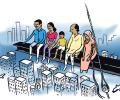
The ongoing West Asia conflict is expected to severely impact the supply of affordable housing in India, as rising input costs further erode already thin developer margins. Fluctuations in crude oil and gas prices, coupled with higher freight costs, are driving up prices of essential construction materials like cement and steel, making new projects increasingly unviable for developers.
